
Boston Felony Records Search
Boston felony records are maintained across several courts and agencies in Suffolk County, with the Suffolk County Superior Court handling the most serious criminal cases. Boston is Massachusetts' largest city and state capital, home to roughly 675,000 people, and its court system processes thousands of felony cases each year through multiple court divisions scattered across different neighborhoods.
Boston Overview
Boston Felony Court System
Felony cases in Boston move through a layered court structure. The Boston Municipal Court handles arraignments and preliminary matters for most criminal cases across nine divisions. Serious felony charges then transfer to the Suffolk County Superior Court for trial and sentencing. The Superior Court sits at 3 Pemberton Square in downtown Boston, and its criminal division can be reached at (617) 788-8160.
The Boston Municipal Court system is spread out. The Central Division is at 24 New Chardon Street. Other divisions serve specific neighborhoods: Charlestown at 3 City Square, Dorchester at 510 Washington Street, East Boston at 37 Meridian Street, Roxbury at 85 Warren Street, South Boston at 535 East Broadway, West Roxbury at 445 Arborway in Jamaica Plain, and Brighton at 52 Academy Hill Road. Each division covers the criminal matters arising in its geographic area before cases escalate to Superior Court.
| Suffolk Superior Court | 3 Pemberton Square, Boston, MA 02108 |
|---|---|
| Criminal Division Phone | (617) 788-8160 |
| BMC Central Division | 24 New Chardon Street, Boston, MA 02114 |
| BMC Central Phone | (617) 788-8600 |
| Court Website | mass.gov - Boston Municipal Court |
Finding the right court matters when you search for Boston felony records. A case might start at one BMC division and then transfer to Superior Court. Search masscourts.org to find which court holds the records you need. The online docket shows case numbers, hearing dates, charges, and dispositions for most criminal matters.
How to Access Boston Felony Records
The main way to get official felony record information in Massachusetts is through the Criminal Offender Record Information system, known as CORI. The Department of Criminal Justice Information Services (DCJIS) runs this system from 200 Arlington Street in Chelsea, MA 02150. You can call them at (617) 660-4600. CORI records cover criminal history including felony charges, convictions, and dispositions statewide, not just Boston.
For your own CORI, you can request it directly from DCJIS. The fee is $25, though that cost is waived if you are indigent. MGL Chapter 6 governs the CORI system and outlines who can access criminal history data and under what conditions. Under Massachusetts law, the lookback period for felony convictions is 10 years from conviction or release from incarceration, whichever is later. Murder and sex offenses carry no time limit.
Court records at the Superior Court and BMC are also public. You can view dockets online through masscourts.org at no cost. The system lets you search by name or case number. In-person requests at the clerk's office give you access to the physical case file, including charging documents, motions, and judgments. Certified copies cost more than plain copies. Call the court before visiting to ask about current fees and what ID to bring.
Boston Police Department Records
The Boston Police Department is headquartered at 1 Schroeder Plaza, Boston, MA 02120. The main line is (617) 343-4200. BPD maintains arrest records, incident reports, and related documents for matters occurring within city limits. These records often feed into court filings and become part of the public felony case record.
Boston Police reports can include incident details, date, time, and location, names of parties involved, officer observations and witness statements, photographs, 911 call records, dispatch tapes, body camera footage, and traffic camera footage. Not all of these items are automatically public. Some require a formal public records request.
To request BPD records, visit bpdnews.com/public-records-request to submit a request online. You can also email MediaRelations@pd.boston.gov. The City of Boston also operates a central public records office at 1 City Hall Square, Room 615, Boston, MA 02201. Phone: (617) 635-4037. Email: publicrecords@boston.gov. The online portal lets you create an account, submit your request, and track its progress.
The lead image below comes from the Boston Public Records portal, the official city access point for municipal records including police reports tied to felony investigations.
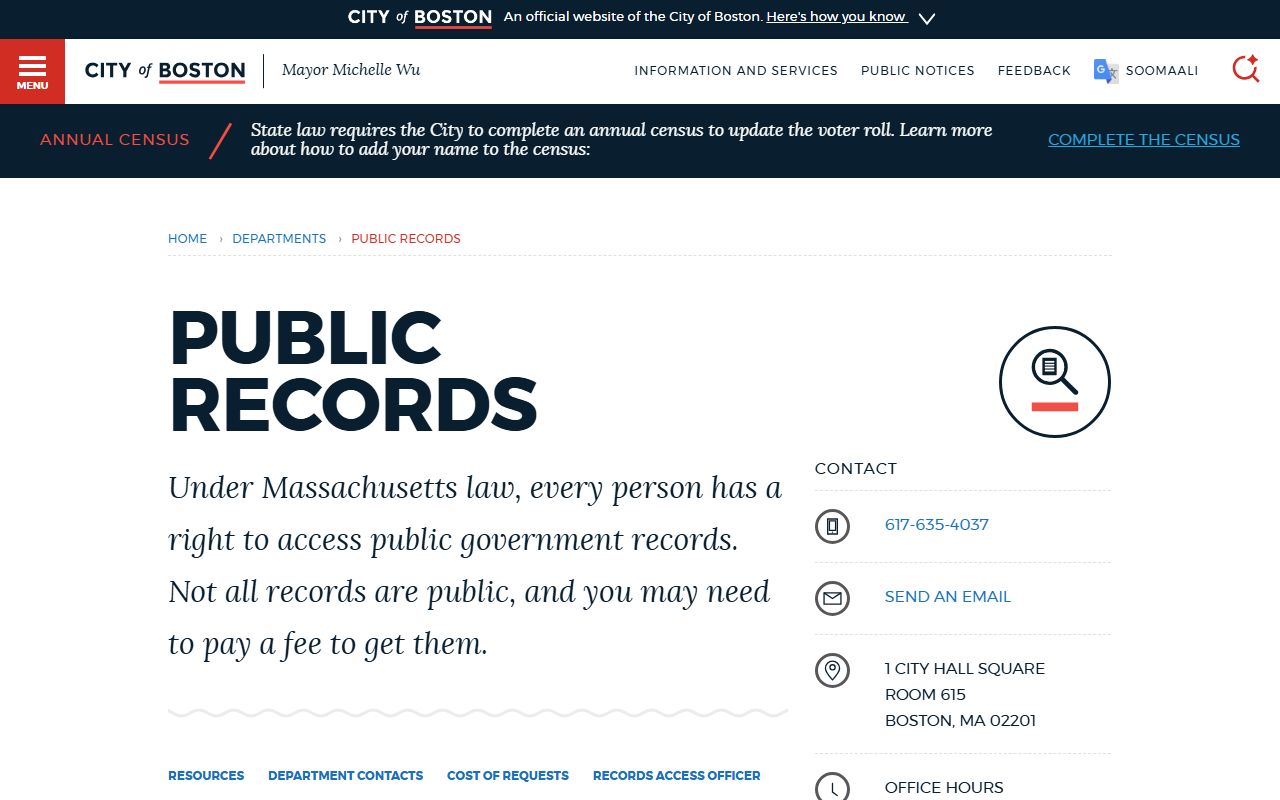
The portal makes it straightforward to submit a formal request and follow its status without needing to visit City Hall in person.
Boston's crime numbers give context to the volume of felony records in circulation. The city recorded 16,537 total reported crimes in 2019, including 4,244 violent crimes: 42 murders, 231 rapes, 1,039 robberies, and 239 aggravated assaults. Property crimes totaled 12,293. That figure represented a 14 percent drop from 2016 levels. Each crime report has the potential to become a felony case record if charges follow.
CORI and Sealing Boston Felony Records
Massachusetts law gives people with old convictions a way to seal their records and limit who can see them. Under MGL Chapter 276, Section 100A, a felony conviction can be sealed after seven years from the conviction date or release from incarceration, whichever comes last. Sealed records are not accessible through standard CORI checks but may still be visible to certain government agencies and courts.
The sealing process starts with a petition filed at the court where the case was heard. For Boston felony cases that went to Superior Court, that means filing at 3 Pemberton Square. For BMC cases, you file at the relevant division. There is no filing fee to petition for sealing. DCJIS processes the actual sealing of the state record after the court approves the petition.
Murder convictions and sex offense convictions cannot be sealed under standard Massachusetts law. Those records remain permanently accessible. If you're not sure whether your record qualifies, the resources listed below can help you figure that out without paying an attorney for an initial review.
MassLegalHelp has a detailed guide on CORI rights, sealing eligibility, and how to navigate the process. Greater Boston Legal Services also offers CORI clinics and free legal help for people in Suffolk County who qualify based on income. These are two of the best free resources available to Boston residents dealing with felony record questions.
Searching Boston Felony Records Online
Several online tools can help you find Boston felony records without going to a courthouse. MassCourts at masscourts.org is the official state portal. It covers both the Boston Municipal Court and Suffolk Superior Court. You can search by full name or case number. Results show charges, docket entries, hearing dates, and case outcomes. Most felony cases from recent years are in the system.
Beyond the MassCourts portal, the DCJIS CORI system is another official resource for criminal history data. For initial lookups, masscourts.org is typically the fastest free option. If you need certified copies or full case files, contact the clerk's office at the relevant court directly. Always verify any results through official court records before relying on them.
The state image below comes from the DCJIS CORI homepage, the official state resource for Massachusetts criminal offender record information.
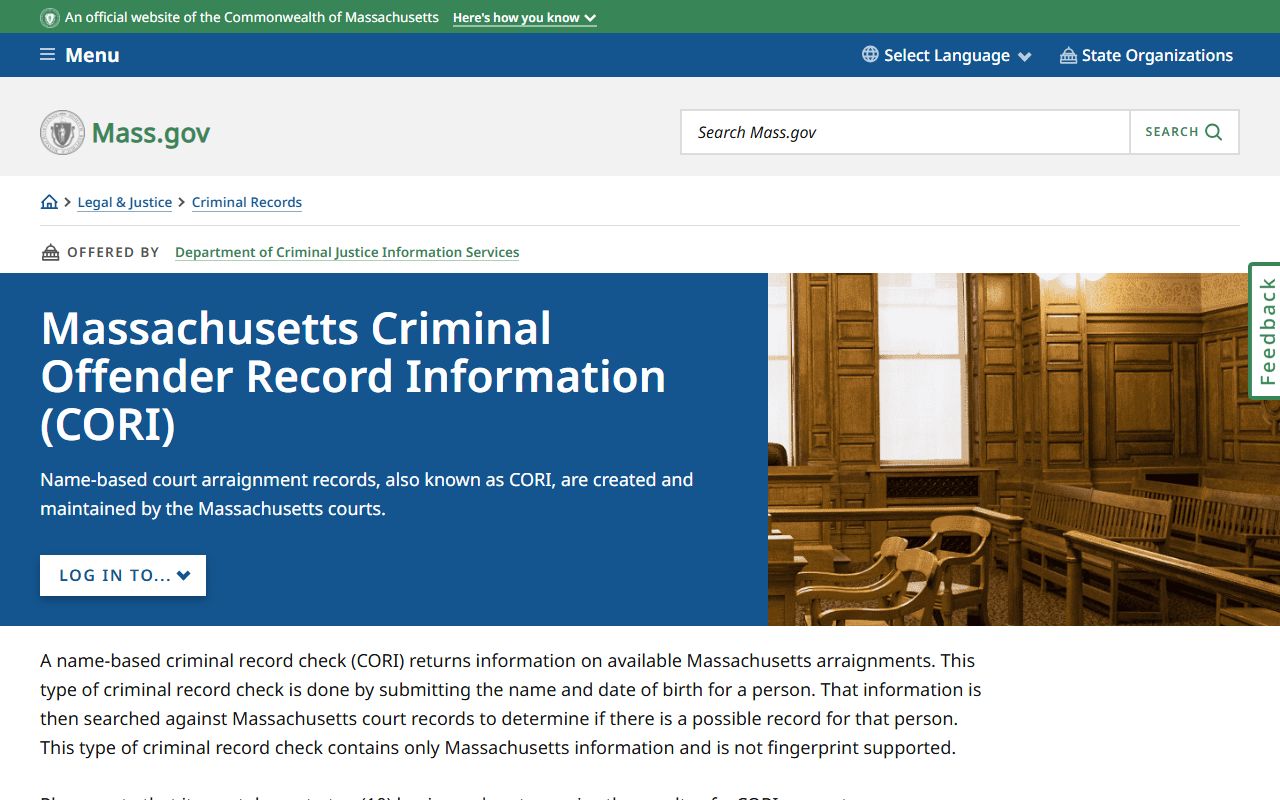
The DCJIS portal is the authoritative state system for criminal history information and the starting point for any official CORI inquiry.
Boston Felony Records: Key Legal Framework
Two chapters of Massachusetts General Laws govern most of what you need to know about felony records in Boston. MGL Chapter 6 covers the CORI system, including how records are maintained, who can access them, and the rules governing criminal history dissemination. MGL Chapter 276 covers sealing and expungement. These two statutes shape the practical reality of how Boston felony records work, who can see them, and how long they stay visible.
Access to public court records in Massachusetts is broad. Criminal dockets, charging documents, and most court filings are public by default. Only specific categories of records are restricted, such as juvenile records, certain victim information, and sealed cases. The Suffolk County Superior Court clerk's office can tell you what is available and how to get it. You can also search court records at masscourts.org without any formal request process.
Nearby Cities
Other Massachusetts cities with felony records resources include these nearby communities.
Suffolk County Felony Records
Boston sits in Suffolk County, and the Suffolk County Superior Court handles all serious felony cases filed in the city. Visit the county page for court contact details, jurisdiction information, and additional resources.