
Massachusetts Felony Records
Massachusetts felony records are stored through the state's CORI system and in court files held by each county's Superior Court. You can search these records online through MassCourts, request them through the Department of Criminal Justice Information Services, or go in person to a courthouse clerk's office.
Massachusetts Felony Records Overview
How Massachusetts Felony Records Work
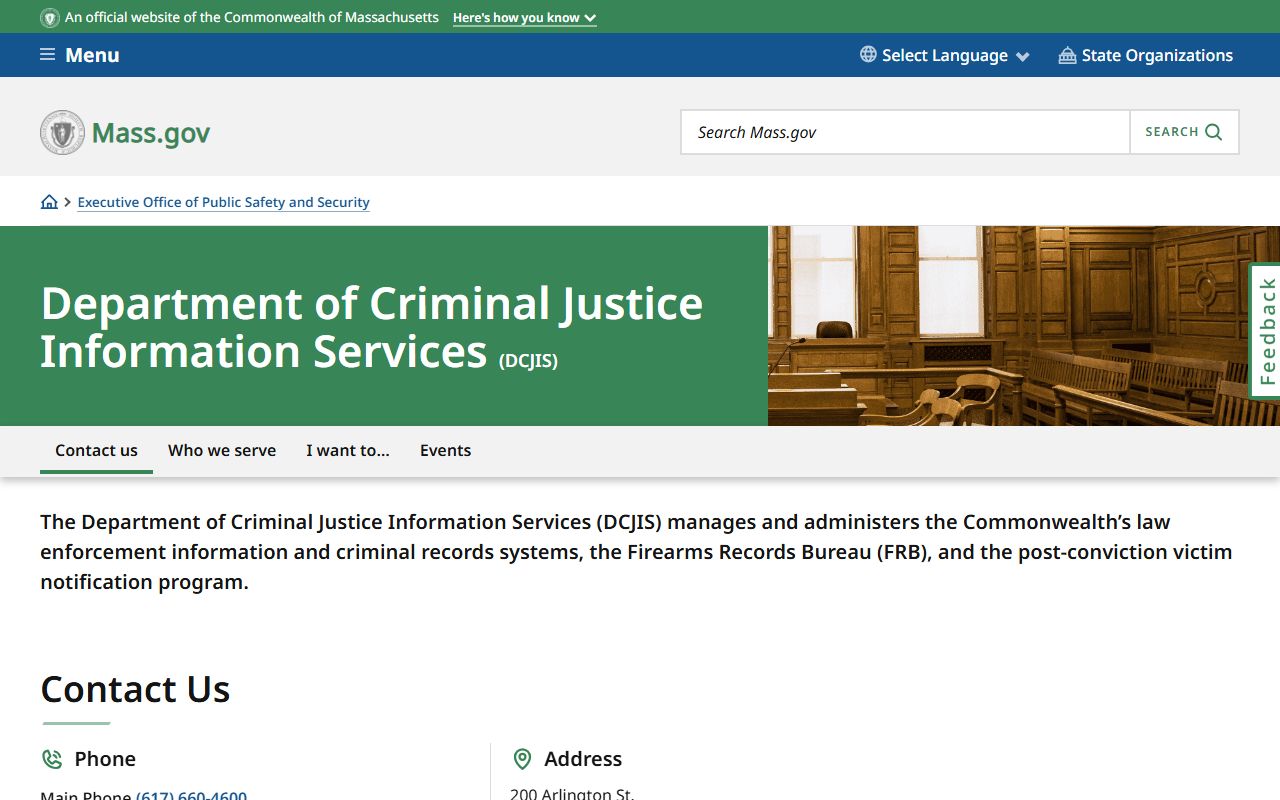
Massachusetts uses a system called CORI, short for Criminal Offender Record Information. The Department of Criminal Justice Information Services (DCJIS) runs this system from its office at 200 Arlington Street, Suite 2200, Chelsea. DCJIS collects criminal history data from courts, law enforcement, and probation offices across the state. All arraignments in Massachusetts state courts end up in this system, along with their final outcomes.
CORI records are not the same as a single court case file. They pull together data from across the whole state. Every time someone is arraigned, a record gets created. The record includes the date of arraignment, the charge, the case outcome, and any sentence handed down. Both convictions and dismissed cases can appear. The record stays open unless it is sealed or expunged.
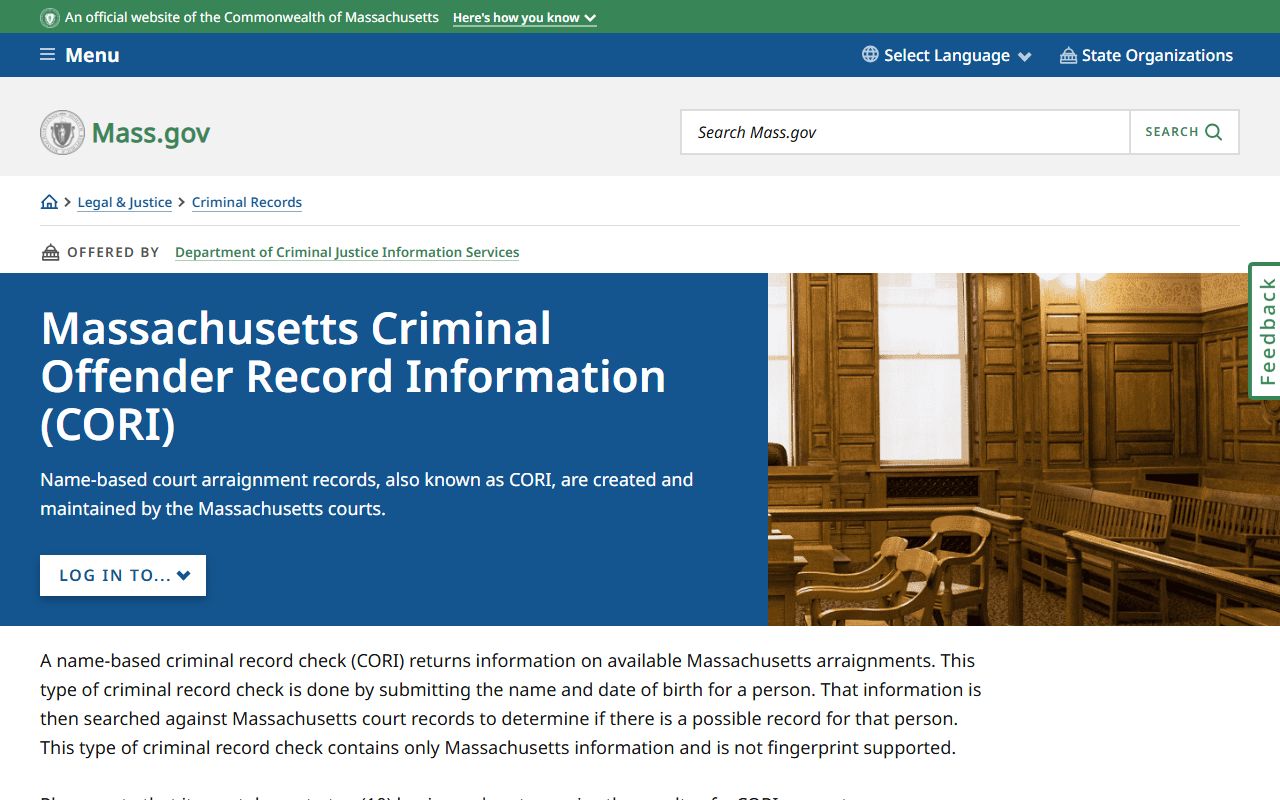
The DCJIS maintains the iCORI portal, which lets people and registered groups request official CORI reports. You can reach DCJIS at (617) 660-4600 during regular business hours. For basic case lookups without an official report, the MassCourts online portal at masscourts.org shows docket entries, hearing dates, and case status at no charge. That said, most criminal case name searches are limited online. You often need a case number to pull up specifics.
Felony records in Massachusetts fall under the jurisdiction of Superior Courts in each of the 14 counties. The Superior Court handles all crimes that carry a sentence of more than 5 years. District Courts handle lower-level felonies with shorter potential sentences. Both courts feed records into the CORI system run by DCJIS.
How to Search Massachusetts Felony Records
You have several ways to search Massachusetts felony records. Each method works for different situations. Online tools are best for quick lookups. In-person visits let you see full case files and get certified copies on the spot.
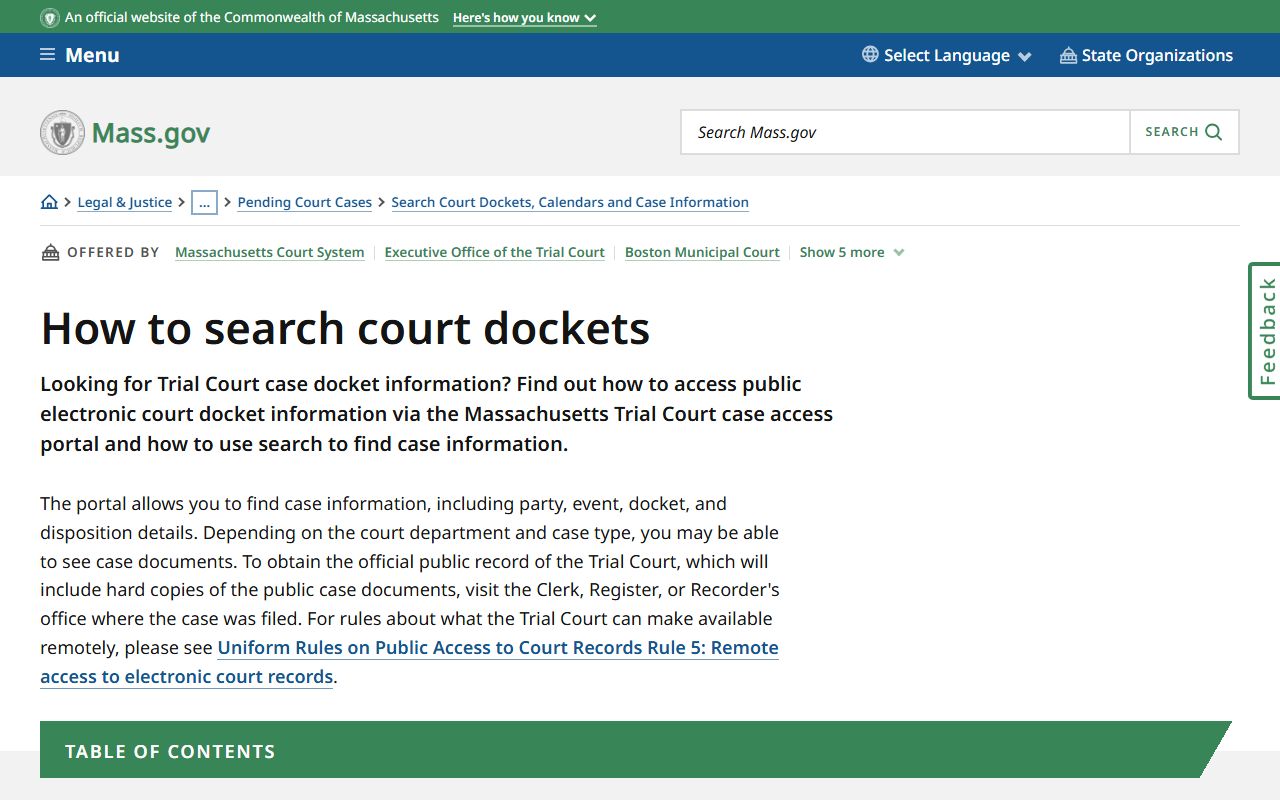
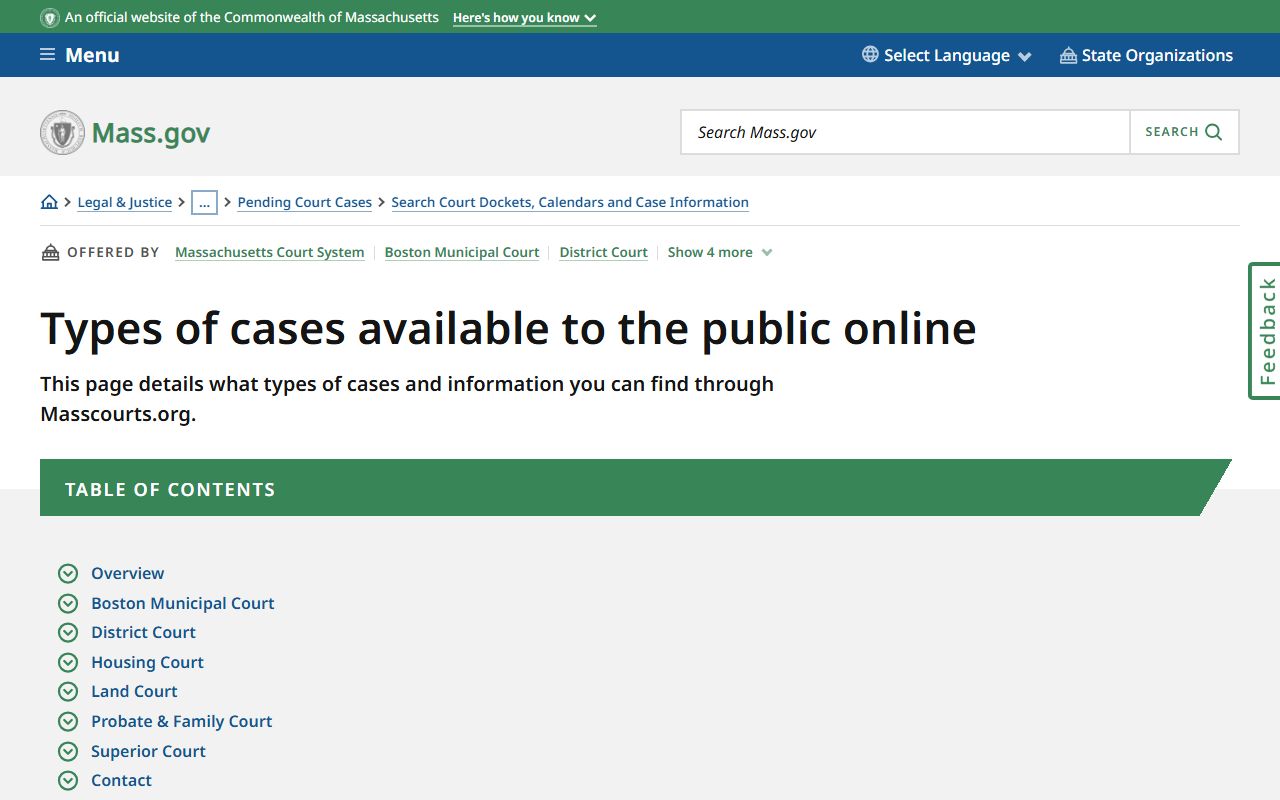
The main online tool is MassCourts. It covers all court departments, including Superior and District Courts. To search, go to the site, check the "I'm not a Robot" box, and click the button to search public records. Then pick the court department, choose the county, and enter the name or case number. Civil cases allow name searches. Criminal cases usually need a case number. Results show party names, case type, filing date, docket entries, and disposition. The search is free.
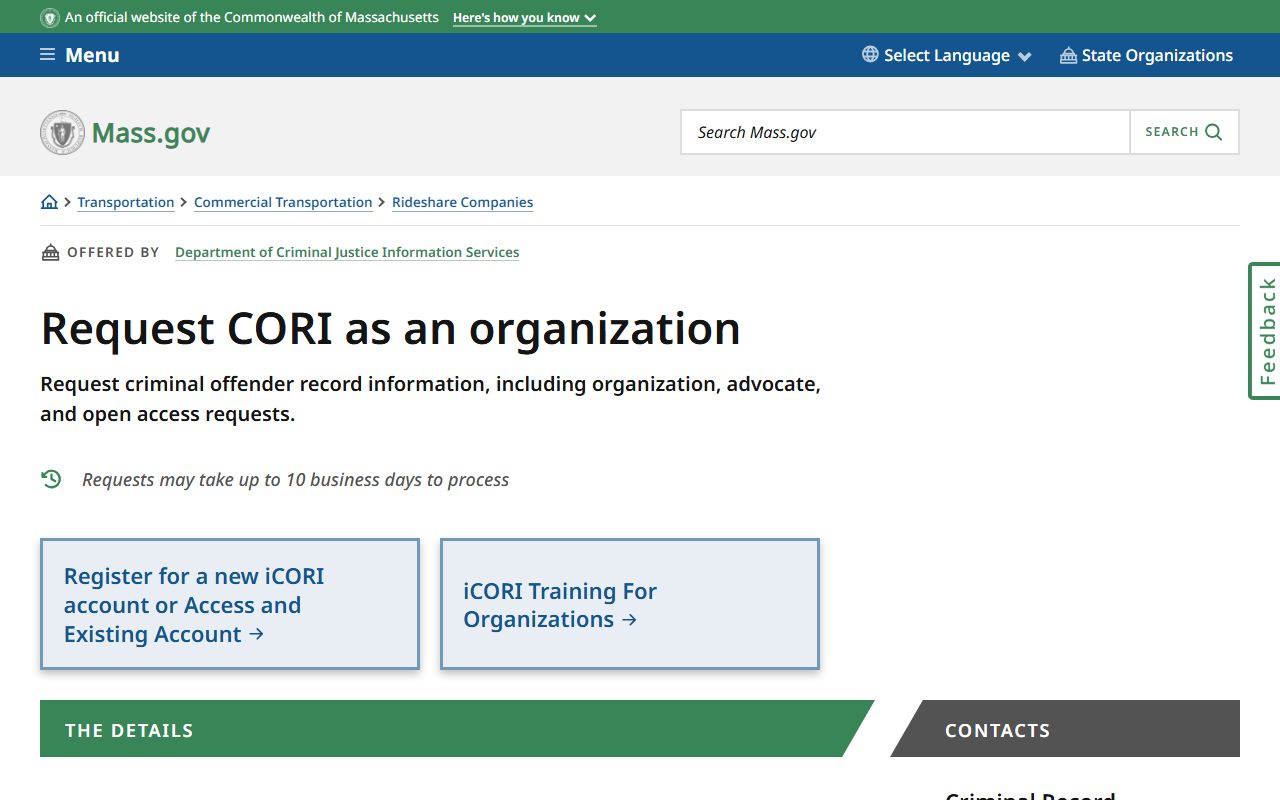
For an official CORI report, you can request one through DCJIS. People requesting their own record can do it online or by mail. The fee is $25, but people who cannot afford it can file an Affidavit of Indigency to get the fee waived. Processing takes up to 10 business days. Mailed requests go to DCJIS at 200 Arlington Street, Suite 2200, Chelsea, MA 02150.
In-person searches are available at any Superior Court clerk's office during regular hours, Monday through Friday from 8:30 AM to 4:30 PM. Bring a valid photo ID. Clerks can search by name or case number and make copies for a fee. Certified copies cost more than plain ones. Rates vary by county, typically ranging from $1.00 to $4.50 per page.
For federal felony cases involving Massachusetts defendants, use PACER at pacer.gov. PACER covers the U.S. District Court for Massachusetts and charges $0.10 per page after a free quarterly threshold. You need to register for an account first.
What Appears on a Massachusetts Felony Record
A standard CORI report shows felony convictions from the past 10 years. The 10-year window runs from the date of conviction or the end of incarceration, whichever is later. Murder, manslaughter, and sex offenses have no time limit. They show up no matter how old the case is. Pending felony charges also appear, even before a case is resolved.
Each entry on a CORI report includes the arraignment date, the court where the case was filed, the charge, and the final outcome. The outcome might be a conviction, a dismissal, a not-guilty finding, or a case continued without a finding (CWOF). Sealed and expunged records do not appear. Juvenile cases also stay off the report in most situations unless the case was transferred to adult court.
Court case files at the Superior Court clerk's office contain more detail than a CORI printout. These files hold the original complaint or indictment, arraignment records, bail information, motions, plea agreements, trial exhibits, verdict forms, and sentencing orders. The docket sheet lists every action taken in the case from start to finish. These documents are public records under the Uniform Rules on Public Access to Court Records (Trial Court Rule XIV). You can inspect them in person for free. Copies cost a small per-page fee.
Note: Some records are not public. Grand jury minutes, active investigation files, juvenile records, sealed cases, and certain mental health records are not available to the general public.
Massachusetts CORI Access Levels
Massachusetts law sets four CORI access levels. Each level controls what records an authorized user can see. The standard public access level covers adult convictions and pending cases. It excludes sealed, expunged, and juvenile records. Level 2 adds non-conviction records for organizations working with children or vulnerable adults. Level 3 includes youthful offender records. Level 4 provides the broadest access.
Individuals always have the right to request their own full CORI. You can do that through the DCJIS iCORI system. The law allows one free self-audit through DCJIS once every 90 days. If you find an error in your record, the DCJIS error correction page at mass.gov explains how to challenge it.
Sealing and Expunging Massachusetts Felony Records
Massachusetts allows people to seal felony records after a waiting period. Under MGL c. 276, § 100A, the wait is 7 years from the conviction or end of incarceration for felonies, and 3 years for misdemeanors. You cannot have any new convictions during that wait. Once sealed, the record does not appear on standard CORI checks and does not need to be disclosed in most situations.
Some records can be sealed earlier under MGL c. 276, § 100C. If your case ended in a dismissal, a not-guilty finding, or no probable cause, you can ask the court to seal right away. The judge must find that substantial justice would be served. This kind of sealing requires a court petition rather than a mail-in request.
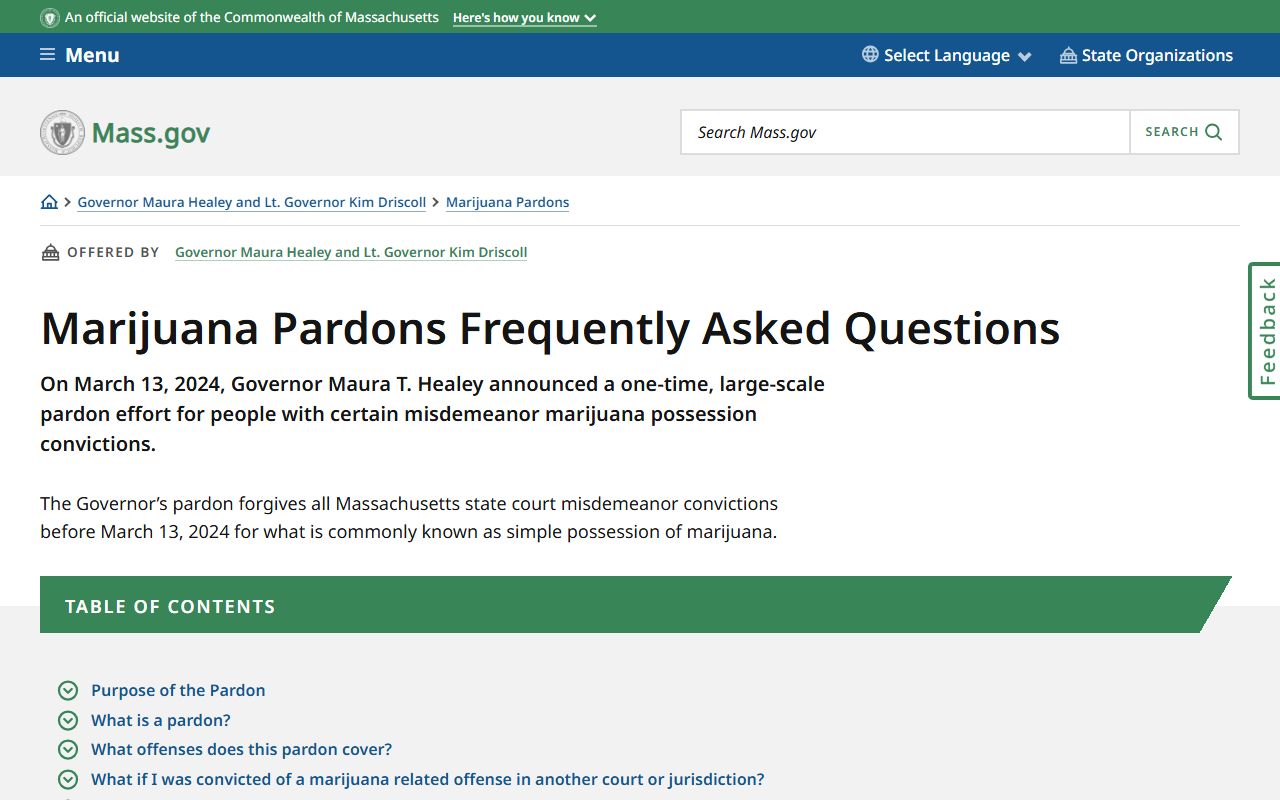
Expungement goes further than sealing. It destroys the record entirely. Under MGL c. 276, §§ 100E-100U, expungement is available in limited situations: identity fraud, cases where the offense is no longer a crime, and errors in how the record was created. In 2024, Governor Maura Healey announced a one-time pardon for misdemeanor marijuana possession convictions before March 13, 2024. Pardon certificates are available upon request. More details on marijuana pardons are at mass.gov.
Drug offense sealing has its own rules too. Under MGL c. 94C, §§ 34 and 44, first-offense drug possession records can be sealed without the standard waiting period. This applies to possession charges only, not sale or trafficking offenses.
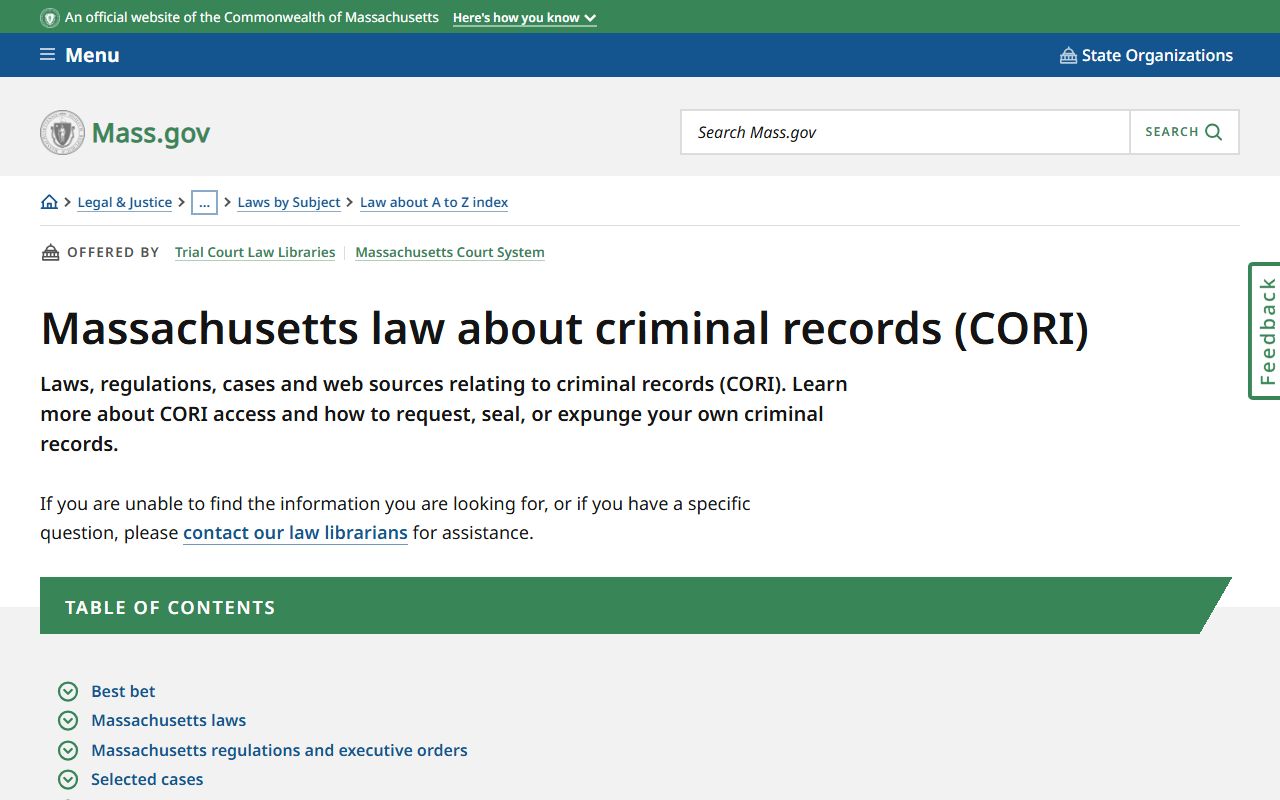
The full text of sealing and expungement statutes is in MGL Chapter 276 at the Massachusetts Legislature's website. CORI definitions and access rules are in MGL Chapter 6. Both chapters are open to the public.
Getting Help with Massachusetts Felony Records
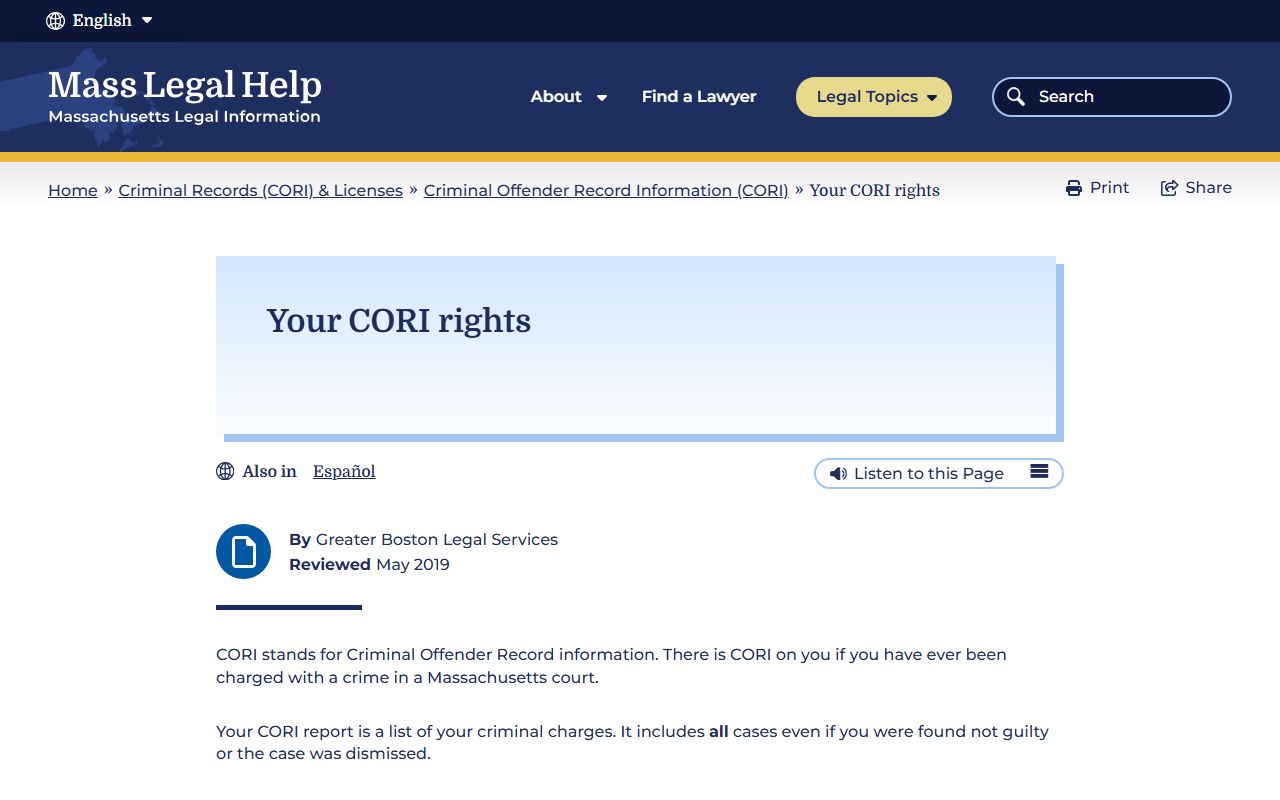
Several free and low-cost resources can help you understand your criminal record in Massachusetts. The Massachusetts Legal Help CORI guide explains your rights in plain language. It covers how to get your record, what it shows, and how to fix errors.
Greater Boston Legal Services provides free legal help for people with low income. Call (617) 371-1234 to ask about services. Their booklets on sealing and expungement are available at gbls.org. Community Legal Aid covers Central and Western Massachusetts. The Massachusetts Legal Resource Finder at masslrf.org helps you find local legal help based on your issue and location.
For errors in your CORI, the DCJIS has a process for disputing inaccurate information. Submit a written challenge with any supporting documents. DCJIS must investigate and correct verified errors. The full process is explained on the mass.gov error correction page.
The Public Access Counselor at the Secretary of State's office handles disputes about whether records should be available. If a court clerk denies your records request, you can appeal to that office. Massachusetts law under MGL c. 66, § 10 requires custodians to respond within 10 business days.
Browse Massachusetts Felony Records by County
Each county in Massachusetts has its own Superior Court that holds felony case files. Pick a county below for local court contacts, search steps, and resources specific to that area.
View All 14 Massachusetts Counties
Felony Records in Major Massachusetts Cities
City residents access felony records through their county's Superior Court and local District Court. Choose a city below for police department contacts, court addresses, and search options.